Q & A: Amy Correia -
By Jeff Inman
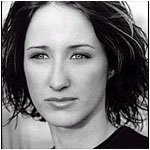
If you
don't watch yourself, Amy Correia is going to sneak
up on you. The singer/songwriter just released her
debut album, Carnival Love, last month. Critics
jumped on the disc like a first grader playing
trampoline on her parents' bed. The reason: Correia
is like the two-lane highway that connects the big
city with small town America, her songs alternating
between tales of life in the urban chaos and
strolling down old Main Street. She's like a female
Tom Waits chronicling the quirky lives that surround
her, or maybe Shelby Lynne without the depression
and drama. But basically, Correia is damn good.
A Little Video By Amy Correia Click
Here
Noise: Carnival Love is your first record. Usually a
first record comes out and it gets decent reviews.
But some are already calling this a career-defining
record for you, a truly brilliant album. Did you
expect that kind of reaction?
Correia: Yeah, um, actually I did, and I think I've
gotten some really positive responses. (Pause) Gee,
hold on, that's being really cocky here. OK, I admit
it. I was really scared when I put this album out.
When you put out an album you really hope that
people will like it. You get really afraid--just
afraid. And it took a long time to make this record
because I had a hard time liking it myself, so
really, I guess, I didn't know what to expect.
N: Why didn't you like it?
C: Why? Because I write songs in my bedroom and all
you're trying to do in your bedroom is come up with
something that moves you personally. Then you take
those songs and go out to a club. You learn which
ones move people and which ones don't. But in the
studio you don't have that response, you don't have
the moments you do when you're playing in front of
people. It was a huge ordeal for me. ... And I had
to realize that everything is not in my control.
That's what I learned with this album: It's all out
of my control. What you're typing now--totally out
of my control. See what I mean?
But the positive feedback has been great. Usually,
you think, 'Oh, I don't give a shit.' But...
(Knocking in background.) Hold on, someone's at the
door. See, something else totally out of my control.
(Noise in the background. Correia starts shouting
through the door.) I can't open the door. There's
like this chain across it.
(Someone says something on the other side of the
door.) No, don't bust down the door. It's not that
kind of door.
(Correia pauses for a moment) Are you writing all
this down? Oh god. (Shouts through door.) I'm doing
this interview with the Cyberville Weekly. (Someone
says "Hi" in the background.) I have to
get a knife know, see if I can wedge this thing off.
God, ask me a question or something. That might be
more comfortable than this.
N: Nah, this is great: the troubles of rock stardom.
C: Oh, I got it. I used a pair of pliers and I made
some progress here. So, anyway, ask me a question,
will ya?
N: OK, do you consider songs more like short stories
or tell-alls?
C: Short stories implying that they're fictitious. I
definitely think they're a blend of reality and
imagination in my songs. All of them have truth in
them. I don't just go making everything up. They're
pretty personal, though, because I want to believe
them myself.
N: You're from Lakeville, Mass., a town of only
6,000 people. A lot of people seem to be playing
that up, like you're some small town girl who went
to the big city to make it. Is it weird to seem this
image of you being crafted that's not necessarily
true?
C: Tell you the truth, I don't read much of the
stuff out there. But it's weird. I went on the
Internet to look up stuff on me--that's probably not
good thing to begin with. But it's weird how
everything has to get boiled down. I'm the small
town girl who made it to the city. And that's fine,
really.
N: You never really intended to be a songwriter, did
you?
C: Well, not exactly. I've always been a singer. And
I was good student and I knew I was going to
college. I majored in English. But I didn't know how
that would transfer into the real world, into a real
job. But I didn't know what I wanted to really do. I
thought I would be a journalist for awhile--we know
that's not a real job.
But then I hurt my back. I had to stay in bed for
two months. I started writing songs while I was
stuck in bed and that really helped me.
N: How did you hurt your back?
C: It was a gradual deterioration of health--sitting
for eight hours a day, a lack of exercise really.
And, well, then there was this Cramps concert where
I drank a little too much and I went into the mosh
pit. I fell. That wasn't so good for me. I never
really tell that side of the story. One doctor said
my back looked as bad as a 45-year-old trucker and I
was 19.
But music was a part of my recovery. I found my
niche and my passion. It really helped my back.
Sometimes they say back problems are psycsomatic.
Maybe it really did help.
BACK TO MUSIC
|
